Stainless steel (preformed) crowns are prefabricated crown forms which can be adapted
to individual primary molars and cemented in place to provide a definitive restoration.
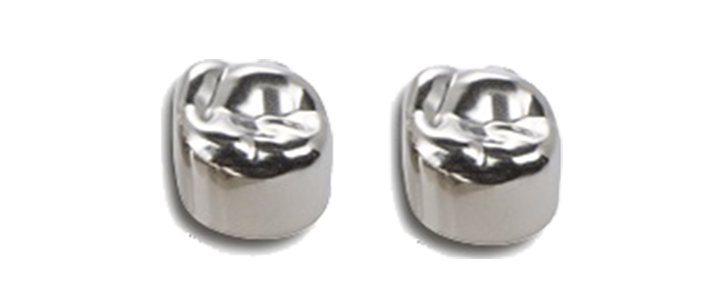
When primary (baby) teeth suffer from a significant amount of tooth decay or require
pulp therapy, it is necessary to place a crown over it. Crowns prevent more tooth
decay and preserve the tooth so that it can last for several more years.
At Gainesville Dental Arts we offer white or tooth-colored pediatric crowns as well
as silver, stainless steel crowns. Since the enamel of baby teeth is thinner, cavities
tend to spread more easily and usually come to affect a larger area of the tooth.
At that point, crowns may be the only way to protect the tooth from premature extraction.
Why Preserve a Baby Tooth or Primary Tooth with a Crown?
Primary teeth decay much faster than permanent teeth. This allows cavities to spread
rapidly and even damage the permanent teeth. When the cavity is too large to be
repaired with a filling, a crown is the last line of defense. Full coverage crowns
allow the tooth to continue functioning while also preserving the space for the
developing permanent tooth underneath.
Baby teeth that show evidence of extensive decay, with two or more surfaces affected,
can sometimes be saved through the use of a crown. Occasionally, especially in esthetic
areas, it is possible to use a tooth-colored crown.
These crowns can be used to protect front teeth when they become cracked or chipped,
have undergone root canal therapy, show signs of decay, or are markedly discolored.
In particular, if the decay or cavity has spread to different surfaces of the tooth
or has reached the pulp of the tooth, a baby root canal may need to be performed.
At that point the tooth becomes weaker and is more likely to crack. In these instances,
it is important to protect the tooth by using a crown.
Which Type of Crown (Tooth-Colored or Silver) Is Best for Restoring Baby Teeth?
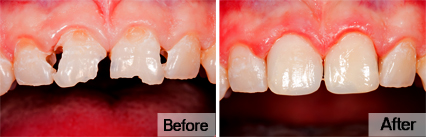
In general,for front teeth, were commend using tooth-colored crowns. These crowns
are bothesthetic and strong. However, for baby molars that are constantly exposed
to chewing and grinding, silver stainlesssteel crowns maybe a better option.
How are baby crowns prepared?
After the child is made completely numb using local aesthesia, all of the affected
tooth structure is removed so as to get rid of any decay. Then the tooth is prepared
in a certain way so that a prefabricated crown can fit on top.
Then we determine what size crown fits best for the tooth.
The selected-size crown is then cemented in place.
The Simplicity of Pediatric Crowns
Unlike adult crown treatments, stainless steel crowns can be completed in just one
visit. The area is numbed, the tooth is prepped, and the crown is bonded over it
on the same day.
Crowning Permanent Teeth
If your child has a permanent tooth in need of a crown, stainless steel crowns preserve
the tooth until it has fully developed and can have a permanent option such as a
porcelain crown later on. This usually occurs in the late teen or early adult years.
Are there any precautions that must be taken after having a crown placed on a baby
tooth?
Immediately after treatment it is important that the child does not eat anything
too hard or sticky. Chips and popcorn pieces can get stuck under the crown, making
it uncomfortable. Sticky or hard candies, like bubble gum, can displace the crown.
If a crown gets displaced, the child should be brought back to the dental office
to have it re- cemented. To prevent this from happening, however, parents should
be careful as to what the child eats after treatment. Often we recommend softer
foods.
Sometimes the gums may become slightly irritated by the new crown. It is important
to continue to brush around the gums of these teeth to prevent further irritation.
Please call 703-743-2324 for an appointment and visit us at Gainesville Dental Arts
in Gainesville.